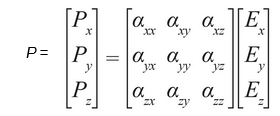
P
Porosity

The ratio of the void volume (empty space) in a material to its total volume (i.e., including particles and the empty space between the particles), usually expressed as a percentage.
Cf., void ratio

Portland cement

A group of hydraulic cements composed of milled clinker usually mixed with calcium sulfate (commonly gypsum) as a set retarder. The most common Portland cement is called Ordinary Portland Cement (OPC). The name Portland cement was derived from the Isle of Portland, U.K., where Portland stone, which looked similar to cement, was quarried. Portland cement sets as a result of hydration reactions, and thus is required to be wet while curing for best stability (strength).
Cf., cement, binder, clinker

Potash margarite

An obsolete varietal term for margarite.

Potash mica

An obsolete term for muscovite.

Poultice

A moist, often medicated, mass applied to a wound or a painful area to reduce pain or to help in healing. The medicated mass may produce soothing vapors to aid in healing. Poultices are commonly hydrated clays, often bentonite. Poultices are also used to dissolve stains from porous decorative stone by the long-term application of a solvent via the poultice.
Syn., cataplasm

Pozzolan

A rock or artificial material composed of amorphous SiO2 (or silica and alumina), clay minerals, carbonate phases, iron compounds, and feldspars. Pozzolan forms a binder at ambient temperatures if mixed with Ca(OH)2 and water due to hydraulic reactions and the formation of calcium silicate hydrate (CSH) phases. Natural pozzolan is usually rich in clay minerals and soluble silica, commonly tuff with volcanic glass (silica) or sedimentary rocks with hydrated amorphous forms of silica (e.g., opal). Artificial pozzolan is often composed of milled bricks or fly ash. Pozzolan is a common additive for mortar and concrete.
Cf., calcium silicate hydrate (CSH) phases, brick, concrete, mortar

Pozzolana

Pozzolana is a naturally occurring siliceous or siliceous and aluminous pozzolanic material or pozzolan with a volcanic origin.
Cf., pozzolan, pozzolanic activity

Pozzolanic activity

Pozzolanic activity is the degree or extent of the chemical reactions in Portland cement and other amorphous aluminosilicates (e.g., metakaolin, some volcanic ashes, fly ash) between a pozzolan and dissolved Ca(OH)2, usually measured in terms of reaction time or reaction rate.
Cf., pozzolan, pozzolana

Preconsolidation pressure

The maximum consolidation pressure or stress that a clay mass has ever been subject to, including the current stress acting on the clay.
Syn., preconsolidation stress, maximum consolidation stress/pressure

Preconsolidation stress

The maximum effective stress to which a clay deposit has been subjected during its entire formation and consolidation process, including any natural processes (e.g., sedimentation, compaction, uplift, ground water fluctuation) or man-made loading or unloading events (e.g., groundwater pumping, construction). Thus, the preconsolidation stress is the maximum value of all past and current effective stresses that have caused the clay to consolidate. The maximum past effective stress is generally determined experimentally by measurement of one-dimensional elastic and plastic deformation that occurs during consolidation, or one-dimensional stress-strain compression curves, or from known events, such as specific sea-level changes, groundwater table fluctuations, etc.
Syn., preconsolidation pressure
Cf., overconsolidation ratio